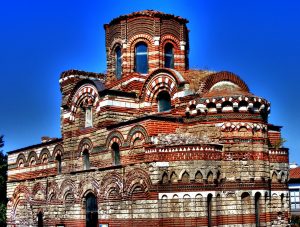
 As a region with centuries-old history and heritage from ancient civilizations, Burgas district has a lot to offer to their guests, who have interests in the sphere of history, culture, ethnography, religion, architecture and arts. On the territory of the whole district there are plenty of unique archaeological remains – ancient settlement mounds from the epoch of Neolith, Thracian sanctuaries and tombs, remains from Roman towns, Byzantine and medieval fortresses, architectural reserves, ethnographic complexes, churches and monasteries and many others.
As emblematic for Burgas district can be shown the monuments in the list of UNESCO – Ancient Nessebar Town, ethnographic complex “Brashlyan” – Malko Tarnovo, fire dancing.
Burgas district has extremely rich folk calendar. There are many traditions and customs in it, where the tourist may touch the Bulgarian customs and culture – Surva (Vassil day), Jordan day, John day, Anton day, Trifon Zarezan, Baba Marta (Martenitsi), Sirni zagovezni, Kukeri day, Todor day, Easter, George day, Holy Virgin, Dimitar day, All Souls’ day, Christmas.
In many Bulgarian villages ancient traditions and customs are well preserved and they are done nowadays. These are Lazar day, kueri, koledari, fire dancers and many others. Extremely attractive are folk festivals and events – International Folk Festival (Burgas) and many others.
There are several museums in Burgas district – Museum of Salt is the only one of its kind in Eastern Europe.
The calendar in Burgas district is extremely rich in cultural events – festivals, competitions.
Cultural tourism includes the following types:
– Heritage (culture and history) with interest to history and linked monuments, sights and places in the visited destination. It includes visit to architectural, historic and religious monuments, architecture – ethnographic reserves and complexes, museums, galleries (in the open), etc.
The cultural and historic heritage of Burgas Municipality is exhibited in the regional Burgas Museum in four exhibitions: archaeological, historic, and ethnographic and nature. Medieval and revival sea monastery on the island “St. Anastasia”.
– Event and festival, with interest to traditional and contemporary performances of cultural events (holidays, festivals, celebrations, etc.) as well as participation in them. Most often these events and festivals are linked with certain arts. They may involve also traditional productions, visit of fairs, bazaars, as well as different sport events.
Burgas is famous all over Bulgaria as a town of festivals – the festival of Bulgarian pop music “Burgas and the sea”, „Spirit of Burgas”, festival of sand figures, International folk festival, Beer fest, Festival of Bulgarian rock music “Rock explosion”, Blues-festival, Theater festival “On the beach”, Autumn literature days, international exhibition bazaar “Flora – Burgas”.
– Religious, with interest to religion(s) of the visited country, visit to saint, worship places. It includes acquaintance with religious canons, rituals, ceremonies and traditions (processions, parades, etc.); sightseeing of religious buildings and monuments with historic, architectural, art and cultural value.
Sights of religious heritage – – “… those that visit the same sights mainly because of their cultural and historic interests, not only of the fact of their religious importance.” – e.g. monasteries – Pomorie, Golyamo Bukovo, Lyulyakovo, etc.; churches, chapels, mosques; the remains of St. John the Predecessor;
Religious holidays – Easter, Christmas (25 December), St. Nicolas day (06 December), St. George Day (06 May), etc.
The Orthodox monuments in Bulgaria are mainly spiritual and cultural centres, more than religious ritual buildings. In Burgas such a centre and at the same time an example of the Christian Orthodox art is the cathedral St. St. Cyril and Methodius. The remaining churches are smaller but their interior is interesting example of the religious art, which in this part of Bulgaria has well distinguished Greek influence. You can enter free in the churches. In Burgas there are acting Catholic and Protestant churches.
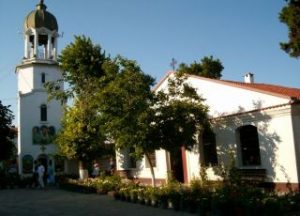 Monastery “St. George” – Pomorie – The monastery “St. George” is acting male orthodox monastery. In 1856 a new church was built. The old one remains until nowadays under the roof of the new one. Together with the new buildings was built 17 – meters high tower – bell /1964 /. In the monastery today there are plenty of precious examples of icon art from XVIII and XIX century. The church icon was painted by the man from Anhialo Temistocal Diamandopolou Zograf.
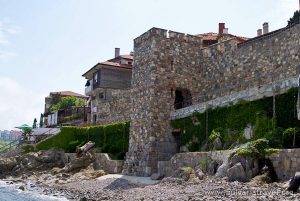 In Sozopol you may visit the following historic monuments:
- Architecture and archaeological reserve Ancient Sozopol – With Decision of the Council of Ministers № 320 since 7 September 1974 the Ancient town of Sozopol was announced a museum. About 180 houses of citizens from the middle of XVIII and the beginning of XIX century form the appearance of the reserve. The houses in the old town are built with stone and wood and belong to the so-called Black Sea architectural type of house. Among the most famous are: “House of Marieta Stefanova”, “House of Kreanoolou”, “House of Todor Zagorov”, “House of Kurtidi”, “House of Dimitri Laskaridis” and others.
- Thracian fortresses in the region of Bakarlaka – Lonely mountainous hill surrounding as a rainbow the plains and low hills around Sozopol. Since XIII – XII century BC the Thracians built (by stone without welding) defense line, consisting of fortresses on almost all high peaks of the hill. The most interesting are the fortresses on peak Atiya, peak Bakarlaka (about 4 decares area on the highest place, 376 m), „Lobodovo kale“ (about 1,5 decares) and „Small kale“ (about 4 decares, the only one where regular archaeological excavations were held – 1973-1977 as a part of the national programme “Strandzha – Sakar”.
- Thracian gravestone mounds – On the high hills of Meden rid оalong the seaside there are plenty of moulds – remains of grave rituals of Thracians. In the past their total number was about 1500. Until today there are a few left and some of them have archaeological excavations.
- Ancient necropolis – The interest to the ancient part of Sozopol dates back from the middle of XIX century. The researchers made their efforts mainly towards research of the necropolis and the materials discovered in them. Today the most famous necropolis of the ancient Apolonia Pontica are those in the Seaside garden and the areas “Harmanite”, “Boudzhaka” (partial archaeological excavations) and “Kalfata” (here annually there are archaeological excavations from Bulgarian and French teams).
- Fortress walls VI–XIV century – Medieval Sozopol is surrounded by fortress walls and towers, built during the reign of emperor Anastasyi, about 511 year. They are used during the next centuries and in certain places they are upgraded and build again. Today from the protection sights considerable fragments are preserved, with a height up to 3–4 metres.
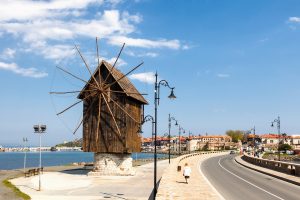 Nessebar in included in the list of UNESCO for world cultural heritage since 1983. The cultural heritage in Nessebar is preserved in five museum expositions. In the old part of the town there were about 42 churches, and a little bit more of half of them are discovered by the archaeologists and preserved, the acting church is only one. Others preserved buildings are turned into art galleries. The neck that connects the old part of the town with the new one is long about 400 metres. In the middle of the neck there is an old mill of the town, which does not function as a mill. It is just a tourist attraction. At the entrance of the new part of the town is the real mill of Nessebar which unfortunately now is a part of a hotel.
Museums – In Nessebar is tourist sightseeing №7 from the One hundred national tourist sights of Bulgarian Tourist Union – Architectural – Historic Reserve with the Archaeological museum – Museum “Old Nessebar”.
Churches:
- „Saint Sofia“ (the old metropolis), ruins of a church from 4th century
- „Saint Holy Virgin Eleusa“, church from 6th century
- „Saint Stephan“ (New metropolis), church from 10th century
- „Saint John the Baptist“, church from 11th century
- „Saint Dimitar“, church from 11th century
- „Saint Archangels Michael and Gabriel” from 13th century
- „Saint Paraskeva“, church from 13th century
- „Christ Pantokrator“, church from 13th century
- „Saint Theodor“, church from 13th century
- „Saint John Aliturget“, church from 14th century
- „Saint Spas”, church from 17th century
- „St. Kliment“, church from 17th century
- „St. Holy Mother“ – acting church since 1873
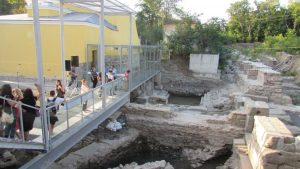 – Archaeological, with interest to archaeology in the country, visits of archaeological sites, places with excavations, participation in archaeological expeditions, etc. – ancient town Akva Kalide – Thermopolis, Deultum, Markeli, Rusikastron
– Ethnographic, with interest to the ethnos of nation(s), sites, subjects and events of the ethnic culture, customs, traditional clothes, language, folklore, traditions, ethnic art, etc.
– Art galleries in Bourgas are more than 10. The main one is the City Art Gallery. Its exposition is made in the building of the former Jewish synagogue, which was built at the beginning of the 20th century using a design project of Italian architects. Today it is announced for a monument of culture.The Gallery possesses items of all the Bulgarian classic artists, of contemporary artists from Bourgas and the richest collection of icons from the Strandzha region.