The city of Burgas is the largest in Burgas District and the fourth largest in Bulgaria. It is situated on the Bay Of Burgas, the biggest bay on the Bulgarian Black Sea coast.
The town of Burgas is surrounded by three lakes – Atanasovsko, Vaya (known as Lake Burgas) and Mandra. They, along with Pomorie Lake, are the largest wetlands in Bulgaria. Burgas is the only place in Bulgaria and along the Black Sea coast where traditional salt mines – those of Atanasovsko and Pomorie Lake – are preserved. There are 340 bird species in the lakes, many of which are protected
 Atanasovsko Lake
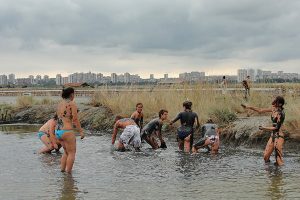
Atanasovsko Lake is a suitable place for eating, nesting, and resting for many bird species. The lake is known as the bird paradise of Bulgaria. At the Atanasovsko Lake there are 318 bird species out of the 450 species found in our country and 241 species of plants. Salt, sea wormwood, broad-leaved fallow, sea swarms, and many others dominate the area. Among the rare plant species is the orchid. Atanasovsko Lake is an important place for the otter, an endangered species. The specific pink color of the lake water is due to the microscopic saltwater shrimp artemia.
Salt lake:
In addition to its habitants, the Atanasovsko lake is also known for the salt which is extracted from it. Here, salt is extracted by an old, traditional method, which helps protect the inhabitants of the lake.
This activity is actually beneficial for maintaining the high biodiversity of the Atanasovsko Lake. The more salt produced in the lake, the greater the number of birds in it. There is another dependency in this unique lake. The amount of salt extracted largely depends on the salt crab. The survival and development of the salt crab depends on the proper maintenance of the lake. In addition to biodiversity and salt extraction, the Atanasovsko Lake also has healing mud and lye, which help treat many diseases.
The “salt path” is 820 m long and starts from the bikeway from Bourgas to the Black Sea Salt Lake in the area around the lake and includes several separate elements. On the asphalt there are various drawings and illustrations that present some of the features of the Atanasovsko Lake and its inhabitants: avocets, crossed swords, a fisherman with his fishing rod, a saltshaker, a train, a salt miner, etc. THe drawings are located on the asphalt in two different directions – for cyclists coming from the city and for pedestrians who coming from the newly built parking lot.
To the path there is a “Corner of the Salt Miner” – an open museum exposition, which presents the profession of the salt miners in the Atanasovsko Lake and some of the typical tools they use in their work.
 The salt train runs from the beginning of May to the end of September. The trip along the dykes of the Atanasovsko Lake among the mountains of salt is fully tailored to the sat extraction. The surprises for anyone who is new to the traditional extraction of salt are numerous and fascinating. Here you can see the pink-red waters of the Atanasovsko Lake (its trademark), the thousands of birds flying over the water, the huge white mountains of salt, called bohirs, appearing under the hands of the sklilled salt miners. Here you will witness how sea water, grazed by gust of wind and the hot rays of the sun, turns into crystal salt. We’ll let you discover the other secrets of the lake on your own.
The Pied Avocet Path is located on the shores of Atanassovsko Lake, in the area around the Bird Watching Shleter. It is a circular route of 285 m, with information boards about the rainfowl birds in the Atanasovsko lake. There is a bird watch observatory on the path, woven by the master of the wicker – Stanko from Bulgarovo.
The “main hero” of the Path is the Pied Avocet called Atanas, whose eyes gleefully present the most important features of the rainflow birds.
 The Vaya Lake (aka Burgas Lake)
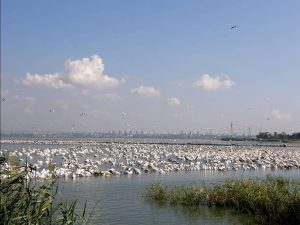
Part of the protected area “Burgas Lake” is the lake of the same name. It is known under two names – Burgas Lake or Vaya Lake. It spilled its waters between two of the residential districts of Bourgas-Gorno and Dolno Ezerovo. The Vaya Lake is the largest natural lake in Bulgaria.
Mandra – Poda
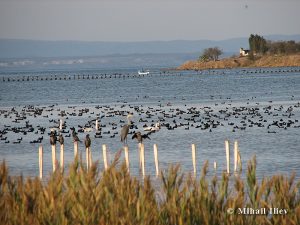 Mandra-Poda is a complex of water reservoirs with different salinity of water. The natural and artificial water basins of the complex offer different living conditions, along with a rich and varied food base for the living world.
The waters of the Mandra dam are sweet. Today the rivers Izvorska, Fakiiska, Sredetska and Rusokastrenska are flowing into it. In the “Poda” area the water basins have mixed waters – from sweet, semi-saline to hypersaline. The waters of the Poda sediments are sweet and warm, so they are a preferred place for 274 species of birds that land in them and in the special places built in the lake to rest. Many of these birds are threatened with extinction. In the waters of Mandra are found small cormorants, the Thoracic Duck, the Red-breasted Goose, the Little White-fronted Goose, the White-eyed Dipper, the Pink Pelican and others. In the cold months of the year, huge wet flocks of brown-headed and hooded dunkers stop in these wetlands, resting and feeding their little swans.
The Poda site is important for the nesting of the white snoopbill. This beautiful white bird has become a symbol of the place. The Pied Avocate is also found here. We can not, and should not, miss one of the majesties of the sky – the sea eagle.
How can you come to Burgas?
You can come to Burgas on land, water, or air.
By car
You can travel quickly from Sofia to Burgas on the “Trakiya” highway. There are many other roads, which you can take to arrive here.
By train
 Railway Station Burgas
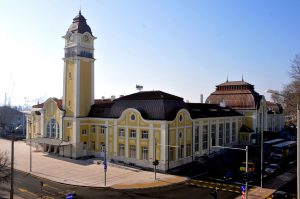
Burgas Central Railway Station is one of the first railway stations in Bulgaria. The Burgas Railway Station is located in the central part of the city, at the end of the Alexandrovska pedestrian street on “Tsaritsa Yoana” square (also called Garov Square). The station is close to the beach, not far from Burgas Maritime Station, the Sea Garden, the central beach, and the Port of Burgas. Next to the train station is the South Bus Station with lines to all the settlements on the southern Bulgarian Black Sea coast, including Varna and the Burgas Airport.
The station building is a very beautiful architectural monument. The railway station in Varna was built according to the blueprints for the one in Burgas. It is among the nodal stations in Bulgaria (even though it’s actually an end stop) with trains to Sofia, all of southern Bulgaria, as well as to Rousse and Pleven.
By plane
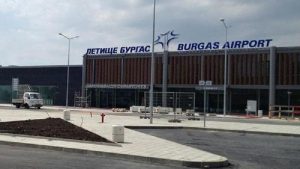 Burgas Airport
Bourgas Airport is an international airport, located in the Sarafovo neighbourhood in Burgas, about 10 km from the center of Burgas. The airport in Burgas serves over 3 million passengers.
On the occasion of the 90th anniversary of the Burgas airport on June 30, 2017, a new Air Museum was opened. It is located at Burgas Airport. There you can see models of planes that come alive. With virtual reality goggles, you can become pilots and manage an airplane. At the Burgas airport, there is an ultraviolet room, where real flights are projected on special video screens. In the Air Museum of Bourgas you can see a 4D model of a working airplane engine, a rich collection of airplane models, quirky items, and obligatory aviation accessories like pilot uniforms, parachutes, pictures, a real black box on an airplane, navigation devices, and more.
The open-air museum has 9 aircrafts, among which there are representatives of agricultural, civil, and military aviation. Among them you can see the most-produced supersonic plane in history – the MiG-21, also called “Peace Dove”, “Ballack”, or “Pencil”.
In Burgas, children can learn about the glorious history of Bulgarian aviation. Some of them might become the next generation of Bulgarian pilots, parachutists, or aviation engineers.
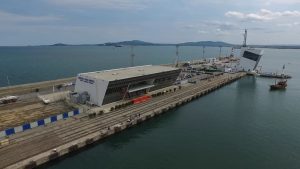 By ship – Port of Burgas and Marine Station
Port of Burgas was established for trade in 1903. Today it welcomes ships for both trade and tourism. There is also a yacht port called Marina Port Burgas.
The lighthouse of Burgas port is remarkable because it is the first Bulgarian lighthouse, lit at the end of the 19th century (in 1899). The maker of the model is Burgas’s first contrabass – Sabi Denev. There is a legend according to which the lighthouse of a seaside town must be protected, otherwise something bad will happen to the city. For this reason, the access of outsiders to the lighthouse is limited. It can be seen from the Central Beach and from the Bridge in the Sea Garden.
The Burgas Marine Station connects Burgas to the sea. The building of the marine station is very remarkable. It has the form of a diamond with silver, white, and dark blue glass.
The train station has terminals for arrivals and departures. Many cruise ships from different countries also port at the station. Next to the station, there is a new maritime cultural center in Bourgas, which organizes exhibitions, concerts and other events.
From the Marine Port you can go to the island of Saint Anastasia with some of the ships Capitan Cook, Anastasia, Afala, Diana or Mirela.
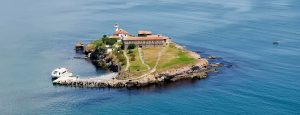 The island of Saint Anastasia is mysterious and has many legends and stories about it.
In the past, when St. Anastasia had a monastery, pirates attacked the island. According to the legend, а golden treasure was buried by a pirate, so other pirates came in pursuit. The monks closed in the monastery and prayed to St. Anastasia to save them from the evil. She heard their prayers and sent a terrible storm that sank the pirate ship. Its remains petrified near the coast of the island, where they can still be seen today.
Besides the Petrified Pirate Ship, there are two more rock formations on the St. Anastasia – the Mushroom and the Dragon.
Another legend tells us that some of the greatest sailors in history, the Vikings, have also reached the shores of St. Anastasia. Some of the interestin places on the island are:
The museum that tells about the rich history of St. Anastasia Island in 6 separate halls, the Pirate Treasury, the island of the priests, the monastery, the prison cells, which were also a place for many Burgas writers and poets.
Saint Anastasia was called Pharmacolitria, which means “a savior of sufferings” in Greek. Anastasia was a renowned healer. This power of the saint is also related to the construction of an authentic pharmacy on the island. There you can taste aromatic tea from herbs that are typical for the region of Burgas, fresh sweet and salty snacks, as well as jam made of figs and many other fruits.
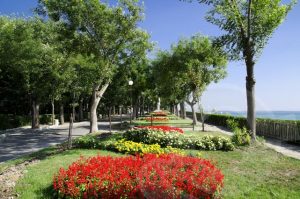 The Sea Garden is located above the central beach in the center of Bourgas. The area of the Sea Garden is 600 acres. The old part of the Sea Garden was declared a memorial of park art. Its construction began in 1910. In 1936, the first Burgas Bridge was opened, and in 1938 the Sea Casino was built. In the past, the Sea Garden also had a Flower Garden with exotic tropical plants.
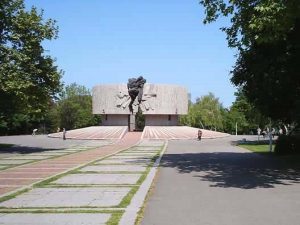
In addition, in the Sea Garden there is also a Summer Theater. Other interesting sites on the territory of The Sea Garden are: Marine casino; The Memorial Pantone of War Wreck; sculptures and busts of famous writers, actors, etc; the seaman’s monument, the horse base, etc.
The Burgas Bridge
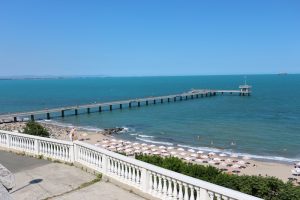 One of the symbols of the city and a favorite place for walks of citizens and guests is the Burgas Bridge. About 300 meters inland into the sea, the bridge in Burgas attracts tourists from close and afar. The bridge enchants not only with the unique view of the endless sea, but also with the memory of numerous eyes in love and first kisses.
A spectacular view of the mysterious Island of St. Anastasia is revealed from the 22 meter viewing room. Built in 1936, the bridge was a metal structure while the platform was built with wooden beams. It was linked through a special stone staircase to the panoramic lane of the Sea Garden and the sea casino. In the 80s of the 20th century, the old bridge was reconstructed and replaced with a massive concrete structure. The bridge is also an indispensable part of the traditions of the greatest Bulgarian holidays Nikulden and Epiphany. Every year, on Nikulden (the holidayt of Burgas) sailors throw wreaths from the Bridge in honour of dead sailors and fishermen. On Epiphany there is a solemn prayer for health and prosperity – the Duke ritually throws a cross into the sea and brave swimmers compete to catch it. It is believed that whoever draws the cross out of the water will be healthy and happy throughout the year.
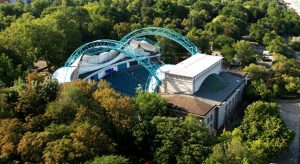 The Summer Theater is situated in the Primorski Park in Burgas. The theater was opened in 1957. It is designed for various cultural activities and traditional events such as Burgas Music Festivals including Emil Chakarov, The International Folklore Festival, The National Competition for Fun Song Burgas and the Sea, etc. Here you can see many musicians and artists performing in concerts, recitals, etc.
The Summer Theater features: a covered stage with modern equipment; galleries for additional lighting; a large upper stage; lighting towers, a lighting bridge; a viewing room with a capacity of 2,250 seating positions located amphitheatrically, with additional standing spots; good acoustics; dressing rooms; lobbies; rooms for preparation and realization of the events; technical conditions for cinema screenings, television and direct broadcasts.
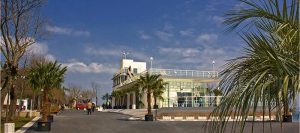 The Sea Casino
The Sea Casino is located on the main alley of the Sea Garden. The whole bay of Burgas can be seen from the terrace of the casino with binoculars and telescopes. In the “Petya Dubarova” hall a civil marriage can be concluded. Today, the casino is a cultural center where many activities, such as exhibitions, concerts, theater performances, and various events in modernly equipped halls, are being held. It is a preferred place for spending your free time.
Open Stage “Snail”
The open-air stage “Snail” is located next to the Marine Casino Cultural Center. It has about 300 seats and a large number of standing spots. There are many varied cultural events – daytime and evening concerts, children’s events, shows, and more. The open-air stage has two dressing rooms. There’s also a platform that allows access to hadicapped people.
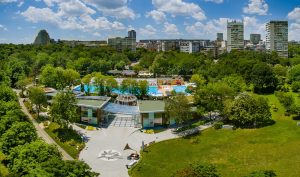 Flora Burgas
Every year, the Sea Garden of Burgas hosts the traditional exhibition of flowers and exotic plants “Flora Bourgas”. The colourful exhibition continues its tradition since 1980 with participants from Bulgaria, Turkey, Holland, Greece, Israel, etc.
The picturesque flower exhibition presents rich arrangements of beautiful flowers and decorative plants along with various artistic and architectural creations. There is also a children’s drawing competition and a special “Nature-Man-Harmony” exhibition.
In the beautiful center “Flora – Burgas”, along with the traditional flower exhibition, there are also other exhibitions, cultural events, museum expositions, cinema screenings, exhibitions of crafts, etc.
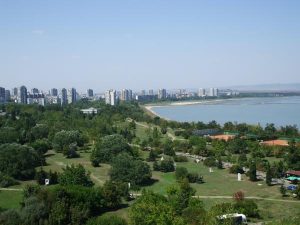 “Lake” Park
Situated 150 meters away from the sea and about a 20 minute walk away from the center of the city, “Lake” Park is a natural continuation of the Sea Garden in Burgas and is therefore one of the attractive tourist areas in the city. The freshness and greenery of the beautiful vegetation are suitable for walking, cycling or jogging for all ages. For tennis lovers there are tennis courts and horse riding facilities that are attractive not only due to their location but also because of their high quality. Every summer there is a Sand Figures Festival, which attracts crowds from near and far.
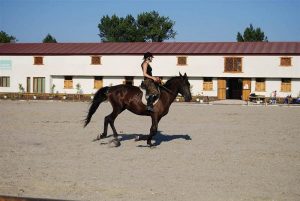 Horse Riding Centre
The “Lake” Horse Riding Center is located in Lake Park, meters away from the North Beach in Bourgas. There you can watch the horses, enjoy a horse or pony ride or a ride on your own horse. On certain days of the year, competitions are held with the participation of some of the most experienced riders not only in Burgas but also in the country.
The hippodrome has an area of 20 decares and a stable with 29 boxes built in accordance with modern requirements for raising race horses. There is a 60 by 70 meter open sandy arena and night lighting. In the summer, night riding is more enjoyable for both people and horses. Currently, 40 horses and 10 ponies are grown in the complex. The modern hippodrome and the Bourgas Horse Riding Club are registered in the Bulgarian Horse Riding Federation.
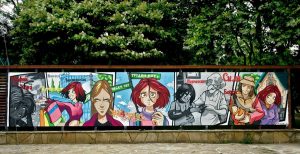 Space for open-air art Stenograffika Burgas
“Stenografika” is the first wall for legal graffiti and street art in the country. Located next to the Graphics Base, it is a durable art canvas in the Sea Garden, next to the beach. Benches made of old surfboards, spaces for hammocks, and chess or backgammon games complement the are around the wall, where local and foreign artists leave their art. The wall is free for everyone, using it does not require prior reservation and has no time restrictions.
The only rule, according to its code that everyone can read on the spot, is the respect and understanding that every creative impulse is provoked by emotion that needs sharing and respect.
Landmarks in downtown Burgas
The main downtown streets in Burgas are Aleksandrovska and Bogoridi.
The Burgas Municipality building is located at the intersection of the two main streets in Burgas. The building was built in the beginning of the 1930s by architect Georgi Ovcharov on the site of the burnt city library.
Symbols of the city and popular hangout spots are:
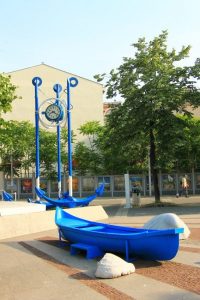 The clock near the building of the Municipality of Burgas was built at the corner of the Bogoridi and Alexandrovska streets in the beginning of the 20th century. The history of the Burgas Clock is connected with many stories and human destinies.
It all began at the beginning of the last century, when the two engineers Georgi Markov and Angel Giuseppev studied in Europe. They decided to find a clock to be placed in an important place. The year was 1936. They contacted a company from which they bought a clock for Burgas. It was a “Fava” brand with a triple dial, shipped all the way from Switzerland. After being delivered in Burgas, the clock was mounted on the spot where the old municipality building used to be. It was powered by electrical pulses transmitted by an aerial cable line from a main watch. The clock measured the time from its initial spot for several years but was later moved to the opposite side of the street.
Today, the clock is located on the corner of the streets “Alexandrovska” and “Bogoridi” on the opposite side of Hotel Bulgaria, where it can still be found. However, the clock hasn’t stayed there for all those decades. Some say that in 1963 the clock was dismantled and dropped into the basement of the current territorial directorate “Primorie”, which is located on Alexandrovska Street.
The emblem of Burgas was saved thanks to the passion of a citizen for clocks. Stefan Nikolov owns in his personal collection more than 450 antique clocks. In 1993, Stefan gave the Clock of Burgas a new life. He pulled it out of the cellar and took on its restoration. It turned out that the old beautiful cast iron structure on which the Clock had stood was irretrievably lost. It was unknown when it had been sold over as old metal and melted. This turned out to be another challenge for Stefan Nikolov. With the help of the artist Kolyo Kehayov, they made a design for a new structure. It was produced in the Spartak plant. Its elements are made of aluminum, which prevents them from being welded. Nikolov used special assemblies to build the construction. The whole process took about 7 months. The construction is triangular and has a watch on each side facing a different street.
It turned out that the mother watch from which the impulses to measure the time were given had also disappeared. Stefan Nikolov contacted companies from Switzerland to provide a new device. Once he understood that it will be expensive, he himself produced an apparatus that delivers the impulses to the dials of the three pylons.
Apart from the new pillars and dials, all parts of the new Clock of Burgas’ are the same as the original’s.
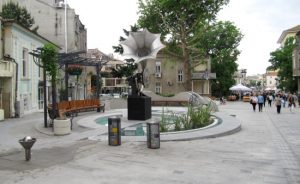 The gramophone is another symbol of Burgas, located on the oldest street in the city – Bogoridi Street. The gramophone, painted by the artist Rusi Stoyanov, is metallic and reaches a height of about 2m. Among the old citizens of Burgas, it is said that when you turn the gramophone lever and listen carefully, you will hear the name of the person who is in love with you.
Museums in Burgas
Regional Museum of History in Burgas
The Regional Museum of History in Burgas is the largest museum in Southeastern Bulgaria. It was established in the distant 1912. It has four main museum exhibitions, located in beautiful buildings and cultural monuments of the city.
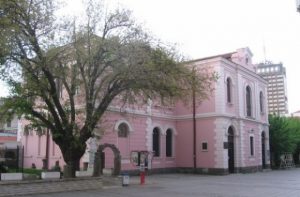 Archeological Museum in Burgas
The Archeological Museum in Burgas is housed in the building of the first public school in the country (1889). There is the largest collection (in the Balkans) of anchors and stockpiles used years ago in shipping.
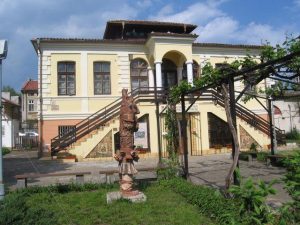 Ethnographic Museum in Burgas
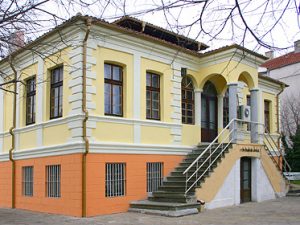
The Ethnographic Museum in Burgas is located near the church St.St. Cyril and Methodius. It is housed in a building built in 1873, which has been declared a monument of culture. The house was donated to Burgas by a remarkable Bulgarian – Dimitar Brakalov (1840-1903), former mayor of the town, who contributed a lot to the contemporary European development of Burgas.
The museum exhibits objects and instruments from to the life of people from the Bourgas region during the XIX and XX century. Various collections are exhibited, including: Kukeri masks, traditional folk costumes, fabrics and embroideries, etc.
Visitors will find interesting information related to the customs, traditions and origins of the local population – fire-dancing and caroling, gladiators and kukeri, mountaineers and gypsies, karakachans and thrones.
In the Ethnographic Museum, you can see the large collection of costumes, fabrics, decorations typical for the region, masks and other items.
 Natural History Museum
At the Natural History Museum – Burgas you can see over 1200 exhibits, of which over 140 are specimens of rare and protected plants from the region.
Petya Dubarova /1962-1979/ -the youngest among the great Bulgarian artists. Her poetic talent emerged in her earliest years. At age 17, she put an end to her life.
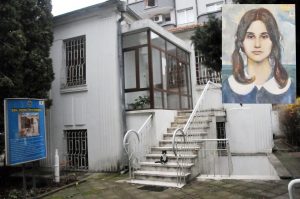 Nowadays, the home of the poet is newly reconstructed as a house-museum “Petya Dubarova. The house-museum was opened on August 7, 1995. The exhibition is presented in 4 sections: scientific-auxiliary, basic, exchange and scientific archive. The authentic and personal room of Petya Dubarova is recreated.
The museum is a scientific and cultural-educational institute for researching, documenting and preserving the literary heritage of the Burgas’ poets.
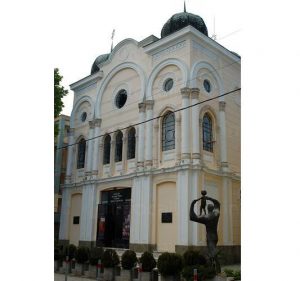 Art Gallery „Petko Zadgorski“
The Art Gallery was built between 1905 and 1910. It is one of the oldest in Bulgaria. The exposition is situated on 3 floors. The gallery stores over 2000 works, including: sculptures, graphics and paintings.
Churches:
– The Church of the Virgin Mary – the oldest church in Bourgas
– The Church of St. Ivan Rilski next to the new building of Burgas Free University
– The St. Cyril and Methodius Church, built in 1895 with beautiful architecture.
– Armenian church
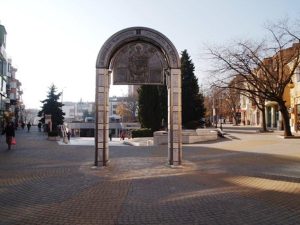 The arch of St. Nicholas the Wonderworker is located in the center of Burgas. It is the work of the artist Ivan Bahchevanov. The arch is made of metal and stone, on both sides of which there are carvings with the iconographic image of St. Nikolay Mirlikiyski – patron of the city of Bourgas.
The two-sided carving of the saint is orientated in the directions of the world east-west, completely in tune with Orthodox tradition. Thus, the first rays of the sun on each new day, and the last glimpses of the sunset illuminate the face of the saint. The carving itself is a creatively transformed icon, the original of which is preserved in the cathedral temple in Bari, Italy, with the precious remains of St. Nicholas the Wonderworker. Legend says that if you go under the arch you will heal your illnesses and be filled with energy and power, as a gift by the saint.
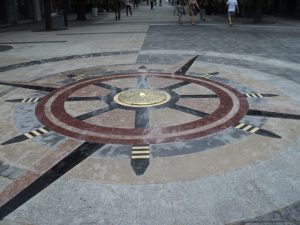 The Hub of Burgas is made by the Burgasi sculptor Radostin Damaskov. The Hub is actually the so-called Null Kilometer of Burgas and its exact coordinates are marked in the middle. The work resembles a shield depicting the symbols of the city. The symbols on the copper disk are a trident (Ψ) symbolizing the Neptune’s rod; three fish as a symbol of Jesus Christ; the ship of the Argonauts as a symbol of the harbor and Black Sea travel, and the laurel wreath as a symbol of the rich history of Burgas. The Hub is installed in 2011 at the intersection of the streets “Kiril and Metodiy” and “Alexandrovska” in the central pedestrian zone.
After a winning competition, Damaskov became the author of the monument of Petya Dubarova in the Sea Garden of Bourgas.
Which is the oldest kindergarten in Burgas? – SG “Magic”
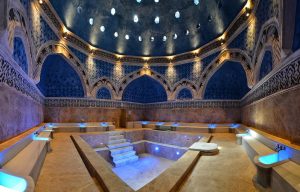 Akve Kallide – Sultan Suleiman The Magnificent‘s Bathroom in Burgas
The fully restored complex will show you how people relaxed centuries ago. Mineral healing waters are found in many places around the world, but those around Burgas have been visited by the most famous rulers of these lands – Philip II of Macedonia, Justinian I, Khan Tervel, Constantine IV, etc. The healing properties of the water were also appreciated by Sultan Suleiman the Magnificent, who in 1562 treated his gout there. Today, Suleiman the Magnificent’s Bathroom is completely restored in all its oriental brilliance.
Sarafovo
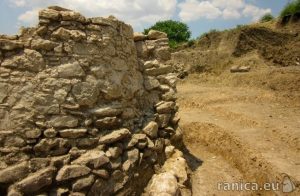 The ancient harbor in Sarafovo, Burgas is the only open ancient facility of this type on the territory of Bulgaria. Only here on the whole Black Sea coast can be seen authentic facilities which served vessels during the Roman Era and Late Antiquity.
Here you can also see the remnants of an ancient coastal street and a city fortress, dating back to IV-VI. Recent studies have also revealed a Christian chapel of VI-XI. Underneath the water, there are remnants of the ancient harbor, making it a unique archaeological landmark.
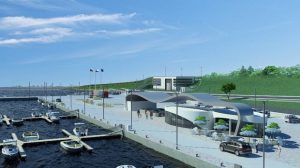 The fishing harbor in Sarafovo is modern and beautiful. The fishing port is perfect for fishermen, who are a majority over here. Its capacity allows it to bay boats of different types and sizes. The port can collect up to 100 boats up to 10 meters in length. There are additional spaces for 20 boats up to 15 m and 10 spaces for ships up to 20 m.
In addition to the convenient spaces for boats and ships, the fishing port also has all the necessary facilities for their maintenance and service. There is a slipway that can provide the entrance into water and the takeoff of the craft. Immediately next to the slipway, there is a covered workshop which takes care of damage to boats and fishing gear. In the boating and mooring areas of the boats, there are power and water supply columns installed. The entire port area is illuminated with energy-saving LED lighting and is monitored through a video system with 29 cameras and recorders.
The fishing port has become a favorite place for romantic walks by the sea.
Leaping boats attract tourists as magnets. Furthermore, In a specially designed quay market, everyone is able to buy fish just out of fishermen’s nets. The fish market has cold storage chambers and ice-making facilities to keep the product fresh.